Step into any serious kitchen, and you’ll quickly notice the revered status of a Japanese chef’s knife. More than just a tool, it’s an extension of the chef’s hand, a testament to centuries of meticulous craftsmanship, and a gateway to unparalleled culinary precision. If you’ve ever found yourself captivated by the effortless glide of a blade through a delicate piece of fish or the perfectly uniform slices of vegetables, chances are a Japanese chef’s knife was at work. At Reviewrdouk Kitchen, we believe understanding these exceptional blades transforms not just your cooking, but your entire kitchen experience.
A Legacy Forged in Steel: The History and Craftsmanship
The story of the Japanese chef’s knife is deeply intertwined with Japan’s rich history of sword making. The same dedication to sharpness, balance, and artistry that created the legendary samurai katana eventually found its way into kitchen cutlery. For generations, master blacksmiths honed their skills, passing down techniques that resulted in blades of incredible strength and edge retention.
While traditional Japanese knives, known as hōchō, have existed for centuries, many of the Japanese chef’s knife styles popular today, like the Gyuto, emerged during the Meiji era. This period saw Japan embracing Western influences, including new culinary traditions. The result was a fascinating fusion, combining the razor-sharp edges and high-quality steels of traditional Japanese forging with the versatile forms needed for a broader range of global cuisines. This unique heritage is what gives Japanese chef’s knives their distinct character and superior performance.
Unveiling the Arsenal: Types of Japanese Chef’s Knives
The world of Japanese knives is vast, with each type designed for specific tasks, much like a specialized toolbox. While many can be versatile, understanding their primary intent helps you choose the perfect partner for your culinary adventures.
What is the Most Versatile Japanese Chef’s Knife?
When it comes to an all-around workhorse, two knives often stand out: the Gyuto and the Santoku.
- Gyuto: Often referred to as the Japanese equivalent of a Western chef’s knife, the Gyuto (“cow sword”) is incredibly versatile. It features a graceful curve that allows for both slicing and a gentle rocking motion, making it ideal for everything from chopping vegetables to preparing large cuts of meat. Typically ranging from 180mm to 240mm for home cooks, it’s a fantastic all-purpose choice.
- Santoku: Meaning “three virtues” (referring to its ability to handle meat, fish, and vegetables, or slicing, dicing, and chopping), the Santoku is another excellent all-rounder, particularly favored by home cooks. It has a shorter, flatter blade profile compared to the Gyuto, making it well-suited for a quick, efficient push-cut, and it often feels more agile in smaller hands.
Beyond these versatile powerhouses, specialized blades offer targeted precision:
- Nakiri: This distinct vegetable knife features a thin, wide, rectangular blade and a straight edge, perfect for precise, clean, straight cuts through vegetables. Its double bevel makes it approachable for both left and right-handed users.
- Deba: A heavy, thick-spined knife, traditionally single-beveled, the Deba is designed for breaking down fish and poultry, separating meat from bone, and light butchering tasks. It’s not meant for hacking through large bones like a Western cleaver.
- Yanagiba: The quintessential sushi and sashimi knife, the Yanagiba boasts a long, thin, single-beveled blade for making incredibly smooth, clean slices of raw fish in a single draw motion, preserving the delicate texture.
- Petty: A “mini Gyuto,” this small utility knife is perfect for intricate tasks like peeling small fruits, trimming, and other delicate work where a larger knife would be cumbersome.
- Kiritsuke: Often considered a status symbol for executive chefs, the Kiritsuke combines elements of the Yanagiba and Usuba, featuring a straight edge and an angled “K-tip.” Traditional versions are single-beveled and require advanced skill.
- Usuba: A traditional single-beveled vegetable knife, the Usuba is a master of precision, used for incredibly thin peeling (katsuramuki) and intricate garnishes. It demands a higher level of skill than the Nakiri.
- Bunka: A stylish and versatile blend, the Bunka often features a distinctive “K-tip” (reverse tanto) and a flatter profile than a Gyuto, making it excellent for push cutting vegetables and detailed tip work.
|
Our Picks for the Best Chefs Knife in 2026
As an Amazon Associate I earn from qualifying purchases.
|
||
| Num | Product | Action |
|---|---|---|
| 1 | 8 Inch Professional Chef Knife with Leather Sheath, Ultra Sharp Kitchen Knife with G10 Handle,Full Tang, Gyuto Style for Home Cooking and Outdoor BBQ, for Men and Women |

|
| 2 | HENCKELS Classic Razor-Sharp 8-inch Chef Knife, German Engineered Informed by 100+ Years of Mastery |
|
| 3 | HOSHANHO Kitchen Knife in Japanese High Carbon Steel, Professional High-Class Chef's Knife 8 inch, Non-slip Ultra Sharp Cooking Knives with Ergonomic Handle |
|
| 4 | PAUDIN Chef Knife, 8 Inch High Carbon Stainless Steel Sharp Kitchen Knife with Ergonomic Handle, Gift Box for Family & Restaurant |
|
| 5 | Okami Blades Classic Chef Knife 8 Inch – Japanese AUS 8 Steel Gyuto Knife, Ultrasharp & Perfectly Balanced Kitchen Knife with Rosewood & Ebony Handle for All Your Kitchen Tasks |
|
| 6 | MOSFiATA 8" Super Sharp Professional Chef's Knife with Finger Guard and Knife Sharpener, German High Carbon Stainless Steel EN1.4116 with Micarta Handle and Gift Box |
|
| 7 | Cuts Like Butter 6.2 Inch Meat Cleaver Butcher Knife with Leather Sheath, Wooden Gift Box, Full Tang High Carbon Steel Japanese Chef Knife for Kitchen Outdoor, Gifts for Women Men Christmas Birthday |
|
| 8 | Victorinox Swiss Army 5.2063.20-X14 Fibrox Chef's Knife Black 8 in |
|
| 9 | Mercer Culinary M22608 Millennia Black Handle, 8-Inch, Chef's Knife |
|
| 10 | imarku Japanese Chef Knife - Sharp Kitchen Knife 8 Inch Chef's Knives HC Steel Paring Knife, Unique Gifts for Men and Women, Gifts for Mom or Dad, Kitchen Gadgets with Gift Box, Gyutou Knives |
|
The Heart of the Blade: Materials and Construction
The exceptional performance of a Japanese chef’s knife largely comes down to the materials used in its construction, particularly the steel.
Blade Steels: A Symphony of Elements
Japanese knife makers typically use two main categories of steel, each with its own characteristics:
- High-Carbon Steel (e.g., Aogami “Blue Steel” & Shirogami “White Steel”): These are the traditional choice for many Japanese knives. They contain a higher percentage of carbon, allowing them to be forged to incredible hardness (often 60+ on the Rockwell scale, or HRC) and sharpened to an extraordinarily fine, long-lasting edge. The trade-off? They are more reactive to moisture and acidic foods, making them prone to rust and requiring diligent maintenance—wiping dry immediately after use and occasional oiling. Over time, high-carbon blades develop a beautiful, unique patina, a natural protective layer that tells the story of your culinary journey. Blue Steel, with added chromium and tungsten, offers even greater durability and “kirenaga” (duration of sharpness).
- Stainless Steel (e.g., VG-10, AUS-10, SG2/R2 Powder Steel): These steels contain chromium, which forms a protective layer, making them significantly more resistant to rust and corrosion, thus easier to maintain. While generally slightly softer than pure carbon steel, modern Japanese stainless steels like VG-10 and AUS-10 are highly refined, offering excellent edge retention and sharpness. Powdered steels like SG2/R2 represent the pinnacle of stainless steel performance, combining exceptional hardness, wear resistance, and edge retention, though they can be more challenging to sharpen.
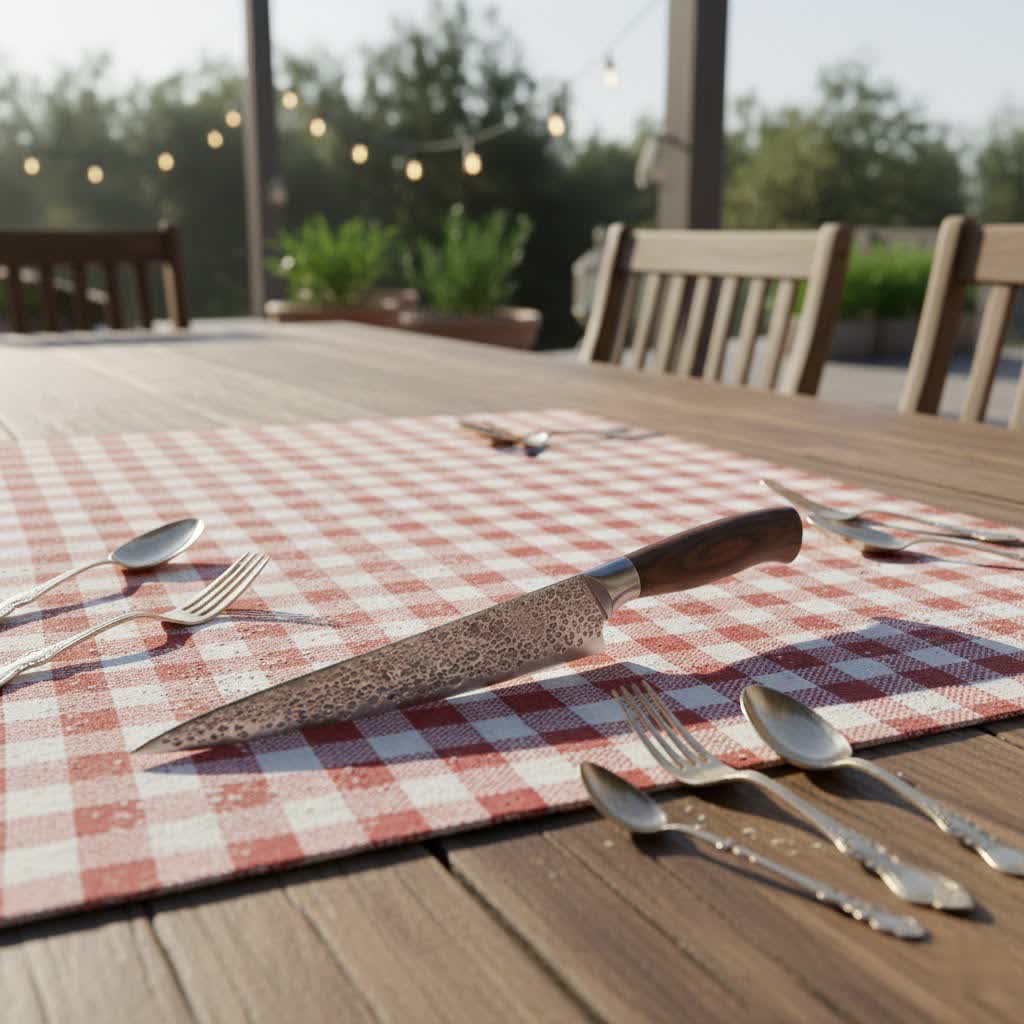
- Damascus Steel: Visually striking, Damascus steel blades are created by forge-welding multiple layers of different steels together, then etching the surface to reveal beautiful, wavy patterns. Often, these blades feature a hard, high-performance core (like VG-10) clad in softer, more corrosion-resistant layers, offering both beauty and robust performance.
Handles: Comfort, Grip, and Aesthetics
The handle is your connection to the blade, influencing comfort and control.
- Traditional Japanese (“Wa”) Handles: Often made from natural wood (such as magnolia, ebony, or rosewood), these handles are typically D-shaped, octagonal, or oval, designed for a lightweight, balanced feel. They are usually “half-tang,” meaning the blade steel extends partway into the handle.
- Western (“Yo”) Handles: Similar to European knives, these handles are often made from durable, water-resistant composite materials like Pakkawood (layers of wood and resin), Micarta (resin-impregnated fabric), or G10 (fiberglass and resin). They provide a secure grip and are usually “full-tang,” with the steel extending through the entire handle for added durability and balance.
“The choice of steel and handle isn’t just about performance; it’s about the connection you feel with your tool,” says Chef Akira Tanaka, a renowned expert in Japanese culinary arts. “A knife should feel like an extension of your spirit in the kitchen.”
Precision in Practice: Techniques for Safe and Effective Use
Japanese chef’s knives are designed for precision and finesse. Their thin, hard blades and acute edge angles mean they perform best with specific techniques, differing from the more forceful, rocking motions often used with Western knives.
The Art of the Cut
- Pinch Grip: For optimal control, hold the knife with your thumb and forefinger pinching the blade at the heel, just in front of the bolster (where the blade meets the handle). Your remaining fingers wrap around the handle. This grip offers superior balance and precision.
- Push-Cut and Pull-Cut: Japanese knives excel at slicing through ingredients with a smooth push or pull motion, allowing the razor-sharp edge to do the work with minimal pressure. Avoid aggressive rocking or twisting, especially with delicate, harder steels, as this can chip the blade.
- Straight Up and Down: For many tasks, a straight up-and-down chopping motion is most effective, particularly with knives like the Nakiri, where the flat blade ensures full contact with the cutting board.
- Cutting Board Choice: Always use a softer cutting board made of wood or high-quality plastic. Avoid glass, stone, or bamboo boards, which can dull or chip your blade rapidly.
Keeping It Sharp: Sharpening and Maintenance Essentials
A Japanese chef’s knife, while capable of incredible edge retention, requires consistent care to maintain its peak performance. Think of it as a finely tuned instrument that needs regular attention.
The Zen of Sharpening: Whetstones
The preferred method for sharpening Japanese knives is with whetstones (or water stones). They remove minimal material while allowing for precise control over the blade’s edge geometry.
- Grit Progression:
- Coarse (80-400 grit): For repairing chips or significant damage, reshaping a very dull edge.
- Medium (800-2000 grit): Your everyday sharpening stone, used for regular maintenance and restoring a noticeable dullness.
- Fine (3000-8000 grit): For refining the edge, polishing, and achieving that renowned razor-sharp finish.
- Ultra-fine (10000+ grit): For an incredibly keen, mirror-polished edge, often done by experienced enthusiasts.
- Sharpening Angle: Japanese knives typically have finer angles than Western knives.
- Single Bevel Knives (e.g., Yanagiba, Deba, Usuba): Sharpen primarily on one side (the “face” side) at an angle around 15 degrees, with a few light passes on the flat “ura” (back) side to remove the burr. These are handed-specific.
- Double Bevel Knives (e.g., Gyuto, Santoku, Nakiri): Sharpen both sides, typically at 15-20 degrees per side. Some might have an asymmetrical grind (e.g., 70/30), where one side is sharpened more aggressively.
- The Process: Soak medium and coarse whetstones in water until bubbles stop. Maintain a consistent angle (using a coin as a guide can help beginners). Apply steady, even pressure, gliding the blade across the stone. Sharpen one side until a “burr” (a tiny wire-edge) forms on the opposite side, then flip and repeat to remove it. Finish with progressively finer grits.
- Honing Rods: A ceramic honing rod can be used for daily maintenance between sharpenings to realign a slightly rolled edge. Avoid steel honing rods, as they can be too abrasive for harder Japanese steels.
Daily Rituals: Cleaning and Storage
- Immediate Cleaning: Always wash your Japanese knife immediately after use. Use a soft cloth, hot water, and a mild dish soap if desired.
- NO DISHWASHER: The high heat, harsh detergents, and aggressive spraying in a dishwasher will severely damage the blade, handle, and edge of any quality knife, especially Japanese ones.
- Thorough Drying: This is crucial, particularly for high-carbon steel knives. Wipe the blade completely dry with a clean towel immediately after washing to prevent rust and staining.
- Safe Storage: Proper storage protects your blade and ensures safety. Options include a wooden knife block, a magnetic knife strip (mounted out of reach), or individual saya (wooden sheaths) that often come with traditional Japanese knives. For carbon steel, apply a thin layer of food-safe oil (like camellia oil) before storing.
Why Embrace the Blade: Benefits of a Quality Japanese Chef’s Knife
Investing in a quality Japanese chef’s knife is an investment in your culinary passion. The benefits are undeniable:
- Unparalleled Sharpness: Experience the joy of effortless slicing, dicing, and chopping. A truly sharp knife reduces prep time and fatigue.
- Precision and Control: The thin blades and acute angles allow for incredibly precise cuts, elevating your food presentation and texture.
- Reduced Fatigue: Japanese knives are often lighter and more ergonomically designed, making extended prep sessions more comfortable.
- Exceptional Durability (with care): Made from high-quality steels and expertly crafted, these knives, when properly maintained, are designed to last a lifetime.
- Aesthetic Beauty: Beyond their function, many Japanese knives are works of art, with stunning Damascus patterns and beautiful handles that add a touch of elegance to any kitchen.
- Elevated Cooking Experience: The combination of sharpness, balance, and precision transforms mundane tasks into enjoyable, even meditative, culinary moments.
Choosing Your Culinary Companion: Tips for Buying
With so many incredible options, selecting your first (or next) Japanese chef’s knife can feel daunting. Here are some tips to guide you:
- Define Your Needs: What will you primarily use the knife for? An all-purpose Gyuto or Santoku is a great starting point for most home cooks. If you primarily chop vegetables, a Nakiri might be perfect.
- Consider the Steel: Are you willing to commit to the higher maintenance of high-carbon steel for its superior edge, or do you prefer the rust resistance and ease of stainless steel?
- Handle Comfort: The knife should feel balanced and comfortable in your hand. If possible, try different handle shapes (traditional Wa vs. Western Yo) to see what feels best.
- Blade Length: For general home cooking, a Gyuto around 210mm (8.2 inches) or a Santoku around 165-180mm (6.5-7 inches) is often ideal.
- Set a Budget: Japanese chef’s knives range widely in price. Excellent quality can be found at various price points, but remember that a higher price often reflects superior materials and craftsmanship.
- Handedness: If considering a single-bevel knife, ensure it’s made for your dominant hand.
Frequently Asked Questions About Japanese Chef’s Knives
Q: Are Japanese chef knives really better than Western chef knives?
A: Neither is inherently “better,” but they excel in different areas. Japanese knives prioritize sharpness, precision, and lighter weight, ideal for delicate slicing and finer cuts. Western knives tend to be heavier, more robust, and designed for durability and a rocking motion, suitable for tougher ingredients. Many chefs find value in owning both styles.
Q: Why are Japanese knives so expensive?
A: The cost reflects the high-quality materials (specialized steels), the intricate hand-forging processes, the meticulous sharpening, and the centuries-old craftsmanship traditions that go into making each Japanese chef’s knife. These are not mass-produced tools but often individual works of art.
Q: How often should I sharpen my Japanese chef’s knife?
A: The frequency depends on how often you use it, the type of steel, and your cutting surface. A good rule of thumb is to sharpen with a medium grit whetstone when you notice the knife doesn’t glide through ingredients as effortlessly or when it struggles to slice through a tomato skin cleanly. Honing can be done more frequently to realign the edge.
Q: Can I put my Japanese knife in the dishwasher?
A: Absolutely not. Dishwashers can damage both the blade and the handle of a Japanese chef’s knife due to harsh detergents, high heat, and potential jostling against other items. Always hand wash and dry immediately.
Q: What is the difference between a Gyuto and a Santoku?
A: The Gyuto is the Japanese equivalent of a Western chef’s knife, typically longer with a more pointed tip and a gentle curve, suitable for a wider range of tasks including rocking cuts. The Santoku is shorter, often has a flatter profile and a rounded or “sheep’s foot” tip, excelling at push cuts and chopping, making it a favorite for vegetables and home cooking.
Q: What is “patina” on a carbon steel knife?
A: Patina is a natural, protective layer that forms on high-carbon steel blades over time as they react with food acids and moisture. It appears as a darkening or discoloration on the blade. Unlike rust, which is red and corrosive, a patina is typically blue, grey, or black and actually helps protect the blade from further corrosion.
Elevate Your Craft with a Japanese Chef’s Knife
The journey into the world of the Japanese chef’s knife is one of discovery—a discovery of tradition, artistry, and culinary excellence. Whether you’re a seasoned chef or a home cook looking to elevate your skills, embracing a Japanese chef’s knife will transform your kitchen experience. Its unparalleled sharpness, precision, and elegant design invite you to connect more deeply with your ingredients and the art of cooking. We encourage you to explore the diverse styles, find the knife that resonates with your cooking style, and experience the difference that centuries of dedication to the craft can make. At Reviewrdouk Kitchen, we’re here to help you make informed choices that will bring joy and precision to your culinary world.
